How to Practice “Creeping Death” on Guitar: A Five-Day Challenge
August 28, 2026
by eduardoBuild the speed, control, and endurance needed to play Metallica’s “Creeping Death” with this five-day, 22-minute guitar practice routine.
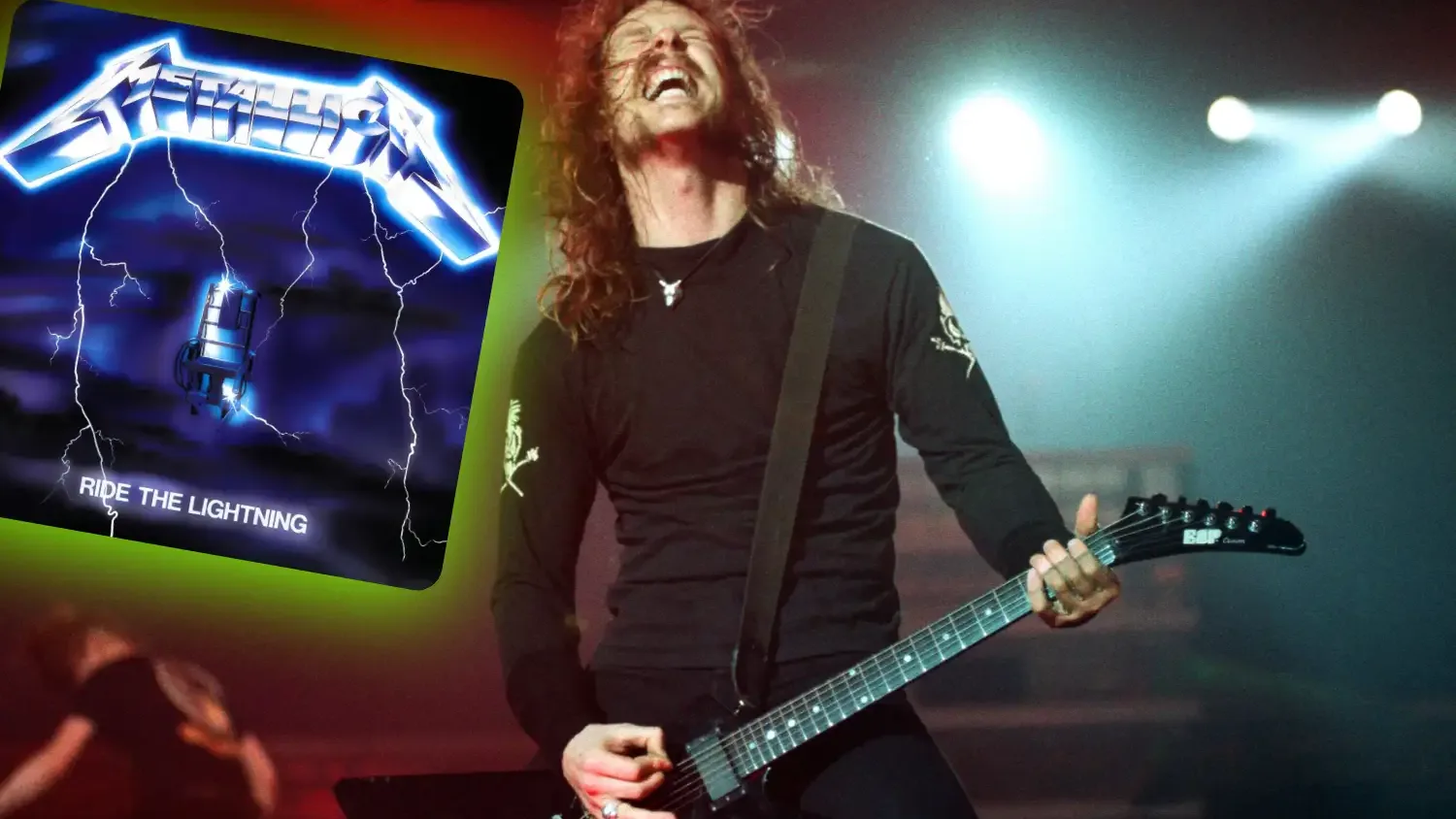
Hey! Are you ready for a challenge?
This isn't just any challenge. In fact, it's a pretty short one: it only lasts five days. Still, I hope what you practice here remains useful long after you finish it.
When you have a specific musical goal, preparing to reach it can be incredibly motivating. Working toward playing a song you genuinely enjoy hardly feels like work. That's why I took one of Metallica's most iconic songs and put together this short 22-minute guitar practice routine.
The idea is to repeat it for five days to develop some of the movements you need when learning how to play Creeping Death on guitar. Afterward, you can keep the exercises that best match your own technical goals.
I understand that not every exercise works equally well for every guitarist. Even so, while analyzing the song, I started thinking about Metallica's influence on metal. Countless bands and guitarists have borrowed elements from their music, and as more people discover thrash metal, more of them will want to learn to play like James Hetfield or Kirk Hammett.
That's why these exercises also have value beyond this one song. They can help if you want to expand your thrash metal guitar technique and improve your downpicking or become more comfortable combining palm muting, power chords, and short legato connections.
The structure of Creeping Death may seem relatively straightforward, but playing it cleanly and at a solid speed is another matter. In heavy metal, speed isn't an occasional ingredient: it's often one of the essential vitamins for any guitarist determined to build a legacy in metal.
The exercises in this routine
Palm muting and downpicking
I'll say it right away, although you've probably noticed it already: James Hetfield loves building riffs with downpicking.
He even uses a fairly distinctive pick grip. You don't have to copy his grip exactly to practice this style. What matters is finding a position that lets you make a small, controlled motion without building up tension.
The general rule is simple: the more relaxed you can remain, the better. Keep the motion compact, watch for unnecessary stiffness, and remember to breathe.
This first exercise uses a groove inspired by Creeping Death. It alternates short bursts of speed—marked by groups of sixteenth notes—with a steadier pulse. It also incorporates palm muting, which means lightly resting the fleshy edge of your picking hand on the strings near the bridge.
You don't need to press very hard. If you rest your hand too heavily, the notes will lose definition and the motion will feel more labored. Aim for a muted sound that still remains clear.
This is our first formal introduction to combining downpicking, palm muting, and a Metallica-inspired groove.
Chugs and power chords
After the first groove, we'll practice two power-chord sequences combined with chugs and palm muting.
I wanted to preserve the exercise's metal character while still making it sound musical. I didn't want to include technical movements that felt completely disconnected from the song. The goal is for you to feel like you're working with a thrash metal riff, even though you're practicing an exercise.
I divided the phrase into two sections. First, you'll practice each half separately. By the third part, you should already be familiar with the movement required to play the complete phrase.
I didn't want this part of the challenge to feel boring. Personally, I don't come across many exercises that deliberately use power chords as part of a technical routine. However, since we're preparing to play Creeping Death, it makes sense to practice the transition between palm-muted notes and power chords.
Metal is full of this dynamic: a low string maintains the rhythmic drive while power chords accent and define the riff.
Creeping Death Training Riff
This could become one of the downpicking exercises you decide to keep in your regular guitar practice routine. It's also one of the most demanding exercises in the challenge.
Depending on the BPM you choose, it will test your endurance, speed, and precision. The pattern begins with a single note on the fifth string, returns to the sixth string with palm muting, and then moves back to another single note on the fifth string.
In each measure, you'll play three single notes and six muted notes. It doesn't look like much on paper, but the difficulty rises quickly as you increase the tempo.
The real objective is to make the transitions between both strings feel controlled. The single notes should sound clear, and the sixth-string chugs should maintain an even pulse.
This movement will prepare you for the next exercises, where we'll take elements from two actual riffs from Creeping Death. In both, you'll need to combine notes or power chords with a continuous palm-muted foundation.
Start at a tempo where you can maintain precision. Increasing the BPM only makes sense once the movement already feels stable.
Hammer-on and pull-off exercise
This was one of the movements I was most interested in turning into an exercise.
You've probably experienced this: you want to learn a song, and one short section drives you completely insane. While studying this passage, I thought about how my past self would have tried to play it when I was only beginning to understand the techniques most commonly used in metal.
I consider it one of the most technically challenging parts because the song combines a hammer-on, a pull-off, and then a chord immediately afterward. All of this happens quickly while you maintain the palm muting.
I wanted to preserve two qualities of the original riff: its speed and the coordination required to connect the legato movement with the following chord. That's why I isolated the movement instead of asking you to repeat the full phrase immediately.
You may be able to play it a few times without thinking much about what your fingers are doing. Isolating it, however, lets you build a bridge between what you do intuitively when you enter a flow state and what you can perform consciously and repeatedly.
There's one important detail: after playing the 5–7–5 pattern on the second beat, a B appears one string higher at the seventh fret. You don't pick this note. I left it this way because it makes it easier to preserve the speed of the passage.
This technique is commonly called a hammer-on from nowhere. Instead of picking the string, you produce the note by dropping the ring finger of your fretting hand onto the fret with enough precision and pressure.
In our tablature, it's represented by a T. It doesn't mean you should tap with your picking hand; it indicates that you should produce the note using only your fretting hand.
Because this is one of the most difficult exercises, start slowly. First, build a clear mental map of the movement. The difficulty should come from increasing the speed, not from still being unsure what your hands are supposed to do.
Creeping Death Bridge Riff
Now it's time for the moment of truth.
This is where you'll be able to tell me whether the routine actually helped. I tried to create a progression that preserves the musical quality and some of the movements from the original riff while maintaining an accessible entry point for guitarists who are still developing this technique.
There are more elements involved in playing the complete song, but the bridge riff strikes me as one of its most recognizable sections and one of the most useful for this challenge.
Everything before this point was preparing us for this moment.
First, you'll find the riff divided into two parts. Practice section A separately, then work on section B. Once both feel familiar, you can play them together as a single phrase.
In the combined version, each section of the riff repeats twice, just as it does in the song. If you consult a complete set of Creeping Death guitar tabs, you can compare our training version with the original passage.
Don't expect your first attempt to come out at Metallica's speed immediately. The goal of the challenge is to see whether, after five days, you can play the riff with more control, clarity, and confidence than when you started.
How long should you practice each exercise?
The times included in the routine are suggestions.
Some exercises last only one or two minutes because I don't want the session to become repetitive. Others receive more time because they develop movements that are especially important for thrash metal and can remain useful after you finish this weekly challenge.
Once you save this routine, you can also adjust the tempo however you like. It's better to complete a clean repetition at a moderate speed than chase the original BPM while building tension or losing precision.
The complete guitar practice routine takes approximately 22 minutes. Repeat it for five days and pay attention to three things:
which exercise feels the most difficult;
the tempo at which you can play it cleanly;
whether the final riff improves as the week progresses.
That's it!
I hope you give it the time it needs and enjoy the process of preparing to play this all-time classic. Stay consistent, but don't confuse consistency with playing through pain or tension.
When you finish the fifth day, return to the original riff and compare it with your first attempt.
Did the routine help? Which part of “Creeping Death” did you find the most difficult?